What Can We Learn from the Beirut Explosion of August 2020?
Craig Ellis, PE, CSP
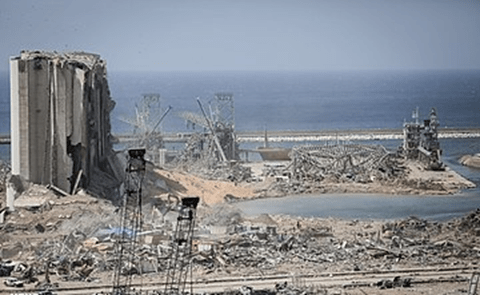
On the afternoon of August 4, 2020, two explosions occurred at the port of the city of Beirut, the capital of Lebanon. The second explosion was extremely powerful, and caused at least 190 deaths, 6,500 injuries, US $10–15 billion in property damage, and leaving an estimated 300,000 people homeless. The event was linked to approximately 2,750 tons of ammonium nitrate –which had been confiscated by the Lebanese government from the abandoned ship MV Rhosus and then stored in the port without proper safety measures for six years.
Apart from the human and financial toll, the blast also destroyed the silo holding 85 percent of the nation’s grain
What is Ammonia Nitrate?
Ammonium nitrate is a crystal-like white solid commonly used as a source of nitrogen for agricultural fertilizer. It can also be combined with fuel oils to create an explosive used in the mining and construction industries.
Ammonium nitrate has the chemical formula NH₄NO₃ and is typically produced as small porous pellets. Ammonium nitrate does not burn on its own. Instead, it acts as a source of oxygen that can accelerate the combustion (burning) of other materials.
Ammonium nitrate is relatively safe when stored properly. However, if you have a large amount of material lying around for a long time it begins to decay. Over time ammonium nitrate will absorb little bits of moisture and eventually turns into a rock. This makes it more dangerous because if a fire reaches it, the chemical reaction will be much more intense.
At high enough temperatures, however, ammonium nitrate can violently decompose on its own. This process creates gases including nitrogen oxides and water vapor. It is this rapid release of gases that causes an explosion.
Cause of the Beirut Explosion
Officials say welding in the port district accidentally sparked fireworks that were stored near the welding operation, which in turn set off a massive cache of ammonium nitrate that had been stored for years in warehouse 12.
Workers were welding a door at warehouse 12 as part of maintenance activities. A former port worker said, “There were 30 to 40 nylon bags of fireworks inside warehouse 12.”
It is believed that welding sparks ignited the nearby bags of fireworks (the first explosion) — which subsequently caused the ammonium nitrate to explode (the second explosion).
Other Ammonia Nitrate Explosions
Ammonium nitrate decomposition can be set off if an explosion occurs where it’s stored or if there is an intense fire nearby. The latter is what happened in the 2015 Tianjin explosion, which killed 173 people after flammable chemicals and ammonium nitrate were stored together at a chemical factory in eastern China.
In 1947, a ship carrying 2,000 tons of the chemical exploded in Texas, killing 581 people.
What Can You Do to Prevent a Similar Incident?
Your facility/operation may not have tons of flammable liquids or materials in storage, but without the proper precautions, safeguards and procedures for welding operations and material storage, simple maintenance tasks could result in unwanted losses.
In response to this incident, consider the following about your facility/operation:
- Do you have designated welding areas were welding can be safely performed?
- Do you have a hot work permit program that allows welding to be safely performed at various locations at your facility/operation away from your designated welding areas?
- As part of your hot work program for welding activities, do you have trained fire watchers who are in place at least 30 minutes after the welding operations are complete?
- Do your workers have the appropriate training on welding safety?
- Does your facility / operation have a strong flammable liquids and materials / chemical program that ensures safe and compatible storage of chemicals and substances?
OSHA (Occupational Safety and Health Administration) and NFPA (National Fire Protection Association) Standards
Welding, cutting, and brazing is addressed in specific OSHA standards for General Industry, Shipyard Employment, Marine Terminals, and Construction. These standards provide provisions and protocols for performing welding, cutting and brazing safely near combustible materials.
Flammable liquids and materials storage is addressed in OSHA standards for General Industry in the Hazard Materials subpart. Additionally, NFPA 400 provides fundamental safeguards for the storage, use, and handling of hazardous materials in all occupancies and facilities.
If you need assistance in improving the safety of your welding program or flammable liquids and materials storage programs, contact Giarc Consulting to get an assessment of your program. Giarc Consulting can develop a detailed plan to improve the safety of your welding operations and flammable liquids and materials storage at your facility/operation.
Conclusion
The devastation of the Beirut explosion caused an enormous human and financial toll on the city of Beirut and the nation of Lebanon. If those welding operations on August 4, 2020 had been performed with the proper safety procedures and protocols along with appropriate material storage, that catstrophe may have been avoided. Remember, welding operations can be safely performed and flammable liquids and materials can be safely stored if the proper protocols and procedures are in place.
References
- 2020 Beirut Explosion, Wikipedia Encyclopedia – https://en.wikipedia.org/wiki/2020_Beirut_explosion
- BBC World News – Beirut explosion: What we know so far – August 11, 2020 https://www.bbc.com/news/world-middle-east-53668493
- Scientific American , What is Ammonia Nitrate, the Chemical That Exploded in Beirut – https://www.scientificamerican.com/article/what-is-ammonium-nitrate-the-chemical-that-exploded-in-beirut/
- New York Times –Why Did Lebanon Let a Bomb-in-Waiting Sit in a Warehouse for 6 Years? – August 5, 2020 – https://www.nytimes.com/2020/08/05/opinion/beirut-explosions.html
- OSHA Health and Safety Topics – Welding, Cutting and Brazing – https://www.osha.gov/SLTC/weldingcuttingbrazing/index.html
- NFPA 400 – Hazardous Materials Code; 2019 Edition
- Post
- Block
Status & visibility
VisibilityPublic
PublishSeptember 2, 2020 3:42 pmStick to the top of the blogAuthorsafetycraigEnable AMPMove to trash
Permalink
Categories
Tags
Featured image
Excerpt
Discussion
Open publish panel
- Post
 Giarc Consulting